The Craft
Pattachitra
West Bengal and Odisha
Folk narratives on fine cotton scrolls
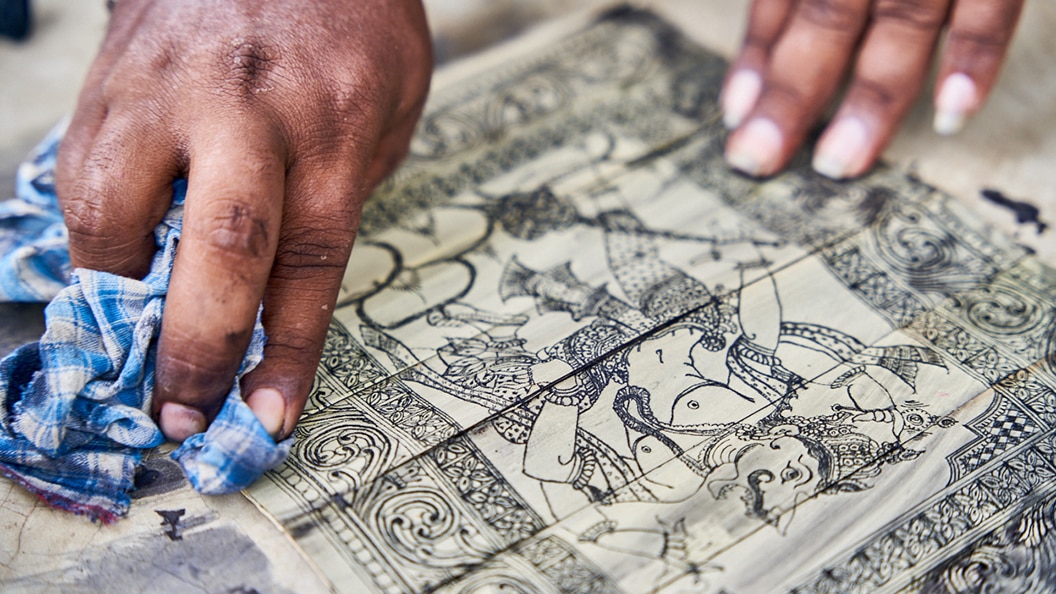
Pattachitra artists from West Bengal and Odisha tell stories from mythology through their paintings on long panels of fine cotton cloth. The word patta means cloth and chitra means painting.
The Making
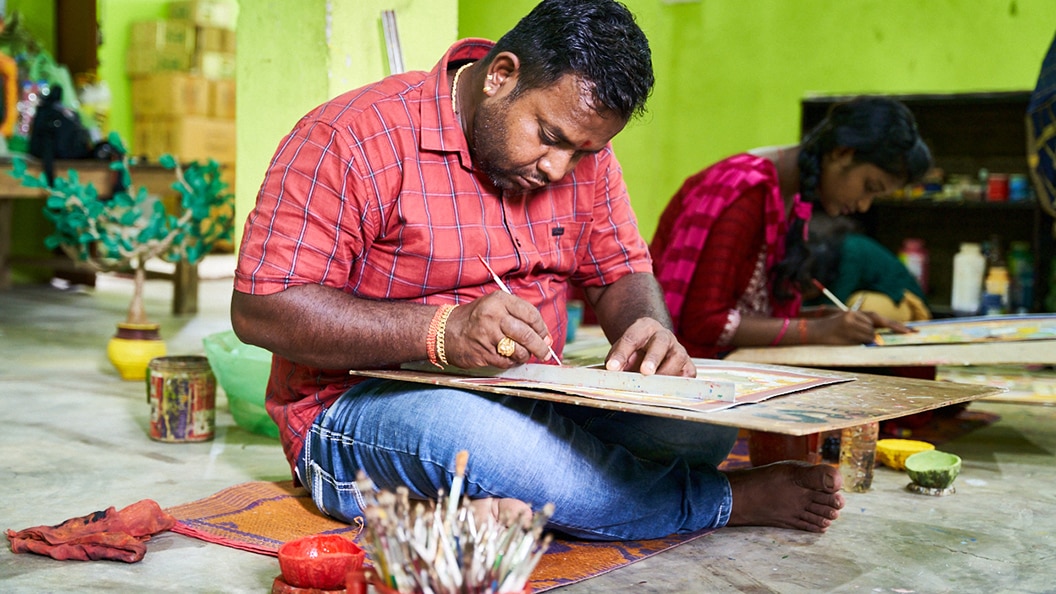
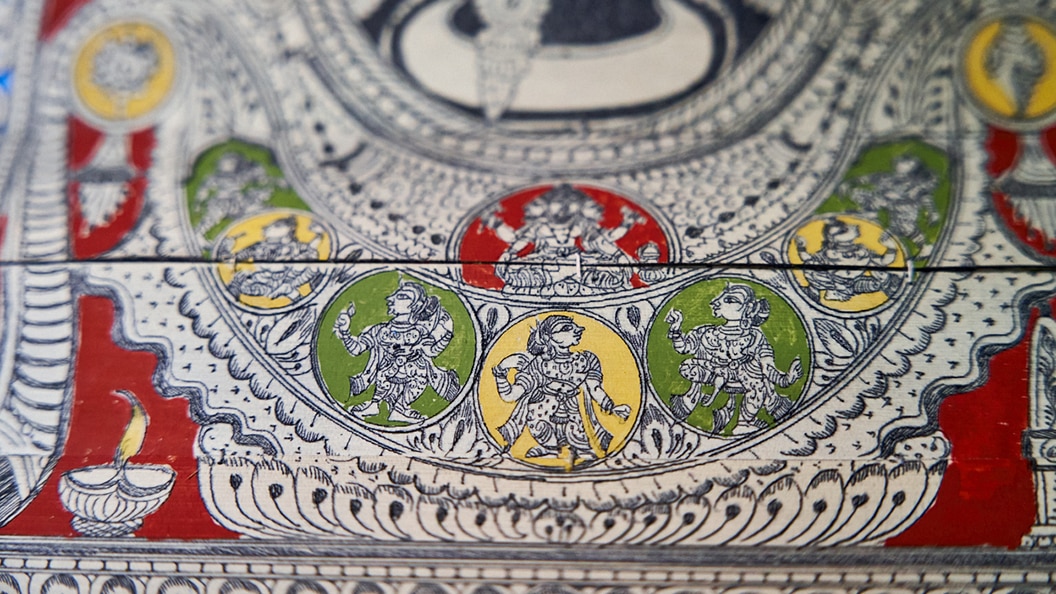
The practice of Pattachitra began with the Mahapatra chitrakars, an artisan community of Odisha who were inspired by the Jagannath Temple. The artists use natural colours. The colour white comes from conch-shell powder, the yellow from the haritala stone, red from red oxide stone, black from lamp soot, blue from indigo, and green from leaves. The artist's scroll is first treated with a white powder, made of chalk and glue from tamarind seeds. Once the painting is ready, the colours are sealed with lacquer for a glossy finish. Some Pattachitra paintings are also painted on palm leaves and handmade paper.
The Legacy
In Bengal, the Patua community is the custodian of the art form. The artists practise Chalchitra, a form of scroll painting. One can find these used as the background for the idol of Goddess Durga during Durga Puja. Pattachitra is also used as a narrative device during Patua Sangeet, a folk music tradition of the Patuas. West Bengal and Odisha Pattachitras have distinct styles. Odisha Pattachitra earned a Geographical Indication (GI) tag in 2008 while West Bengal Pattachitra earned its GI tag in 2018.
Memory Vault
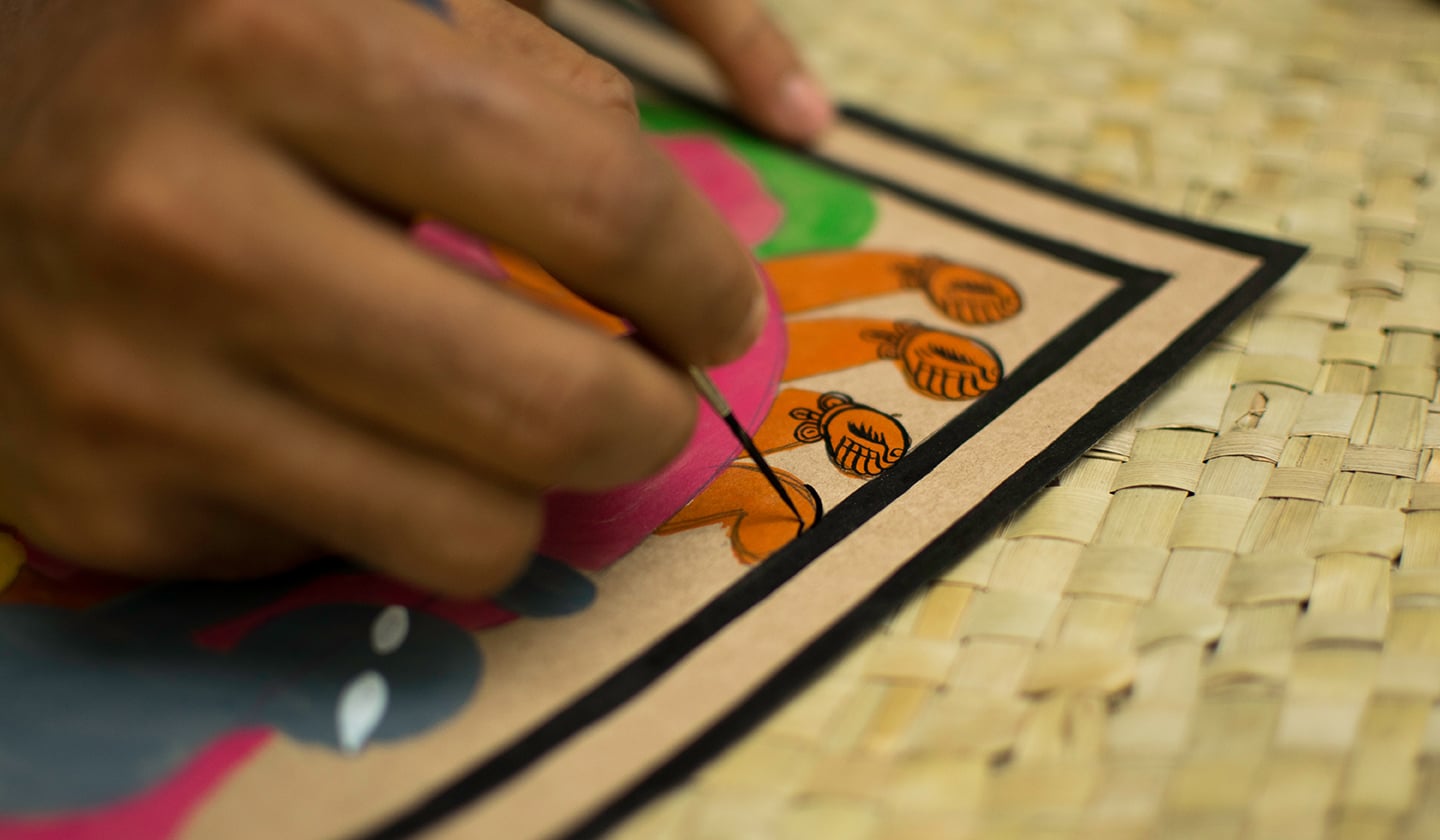
Kalighat Pattachitra was a key inspiration for legendary Bengali artist Jamini Roy. At a time when India was at the peak of its struggle for Independence, Roy consciously rejected Western artistic traditions.
Discover
The Collection
Featured
More from India