THE CRAFT
Blue pottery
Rajasthan
A ceramic ode of Persian descent
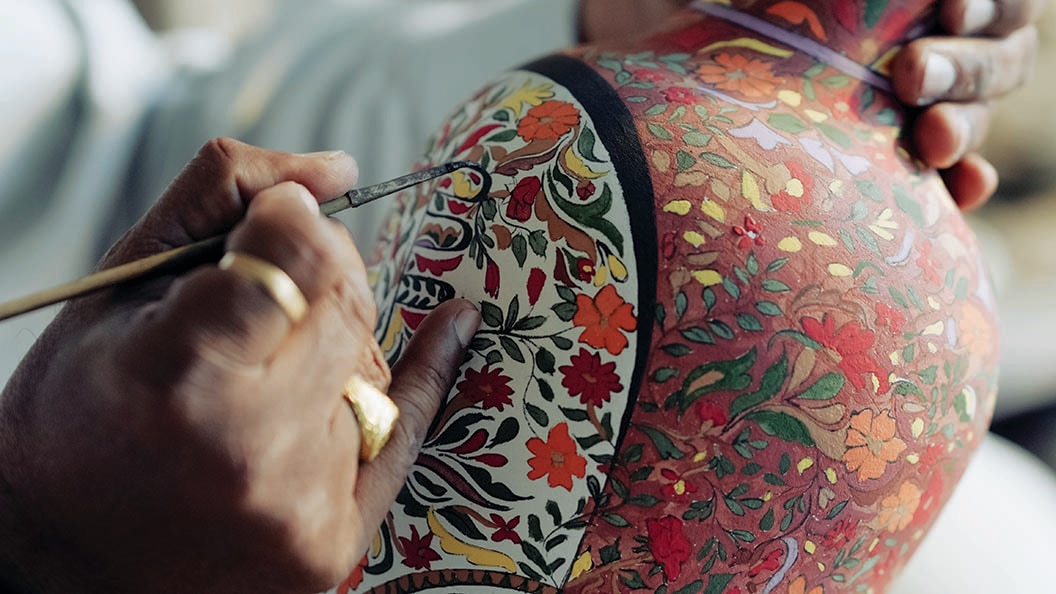
Renowned for its distinctive low-temperature glazing and captivating shades of cobalt blue, Jaipur pottery traces its origins all the way to Persia. Each piece carries echoes of the past, adorned with intricate Persian motifs, whilst also embracing creativity with contemporary designs.
The making
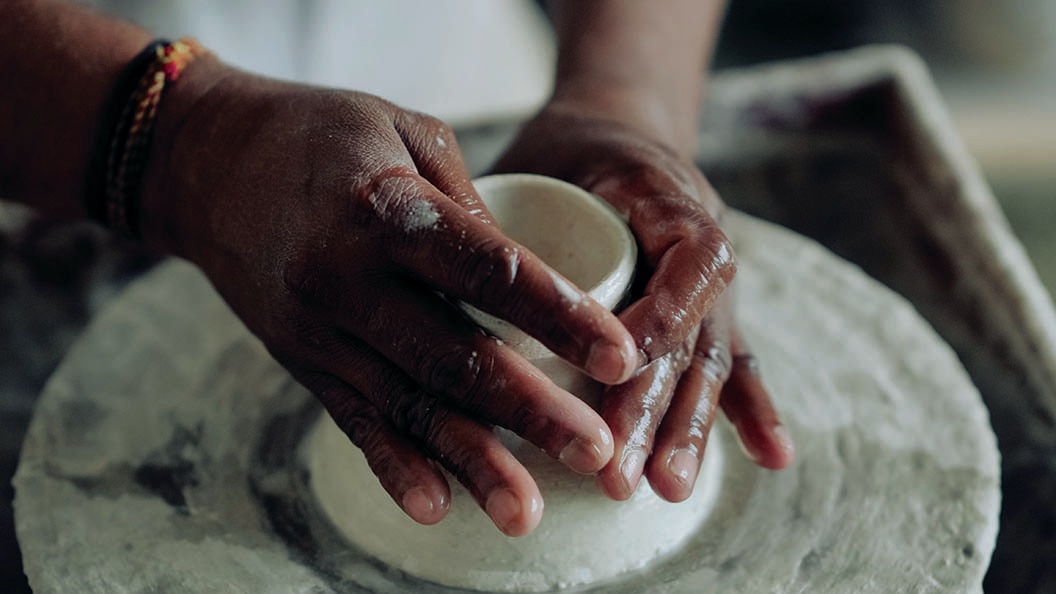
The absence of clay distinguishes blue pottery from traditional pottery. Artisans blend materials like quartz stone powder, multani mitti (Fuller’s earth), powdered glass, borax, gum, and water to craft each piece. They use both the potter's wheel and plaster-of-Paris moulds to shape the artefacts, and low-temperature glazing for a lustrous finish.
The legacy
Historically, artisans primarily crafted surahis (narrow-necked jars) and cylindrical jars to suit traditional lifestyles. However, today, they have diversified their range to meet contemporary needs. From vases and ashtrays to plates, tiles, jugs, and mugs, there's a plethora of blue pottery artefacts to choose from. Not only are these creations visually stunning, but they're also durable enough for everyday use and resistant to cracks, making them both functional and beautiful.