The Craft
Sujani Hand Embroidery
Bihar
The Running Stitch of Life
The tradition of Sujani, also known as Sujini, embroidery is rooted in the practice of repurposing old saris, dhotis and other clothing. This traditional technique can be traced back to the 1920s. It has roots in Bihar’s Bhusara village. Old clothes were upcycled beautifully using embroidered motifs of deities, blossoms, and peacock designs.
The Making
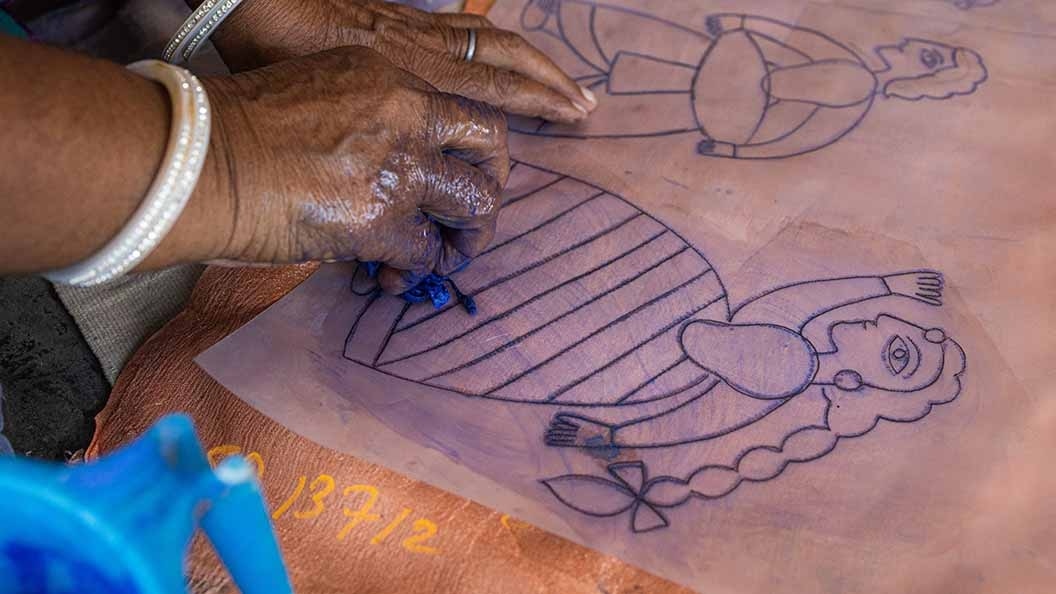
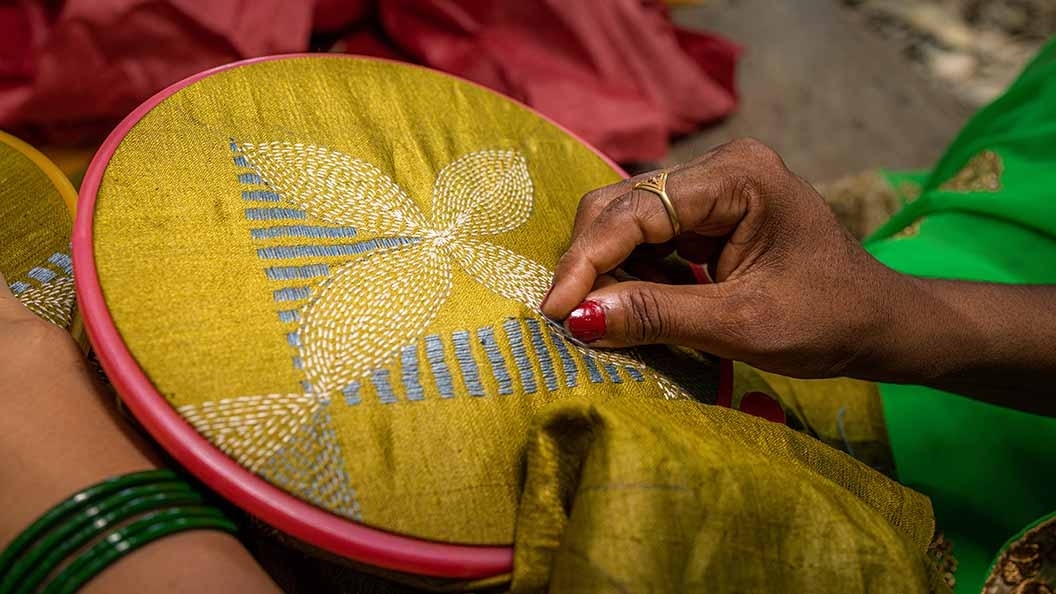
Initially practiced by Rajput women, "Sujani" gets its name from su, (enablement) and jani (birth). The artists first transfer their designs onto the base material. They create an outline using the delicate running stitch. Then, black or brown threads are used to contour motifs, while colourful threads are added for vibrancy. The toolkit of a Sujani artisan includes needles, frames, threads of assorted hues, scissors, measuring tape, tracing sheets, tracing wheels, pencils, erasers, blue chalk and kerosene.
The Legacy
Sujani is seen as an expressive textile of embroideries that narrate untold stories. While artisans continue to repurpose older garments, the use of the embroidery has over time, spread to saris, kurtas and dupattas. The craft was certified with a Geographical Indication (GI) tag in 2006.
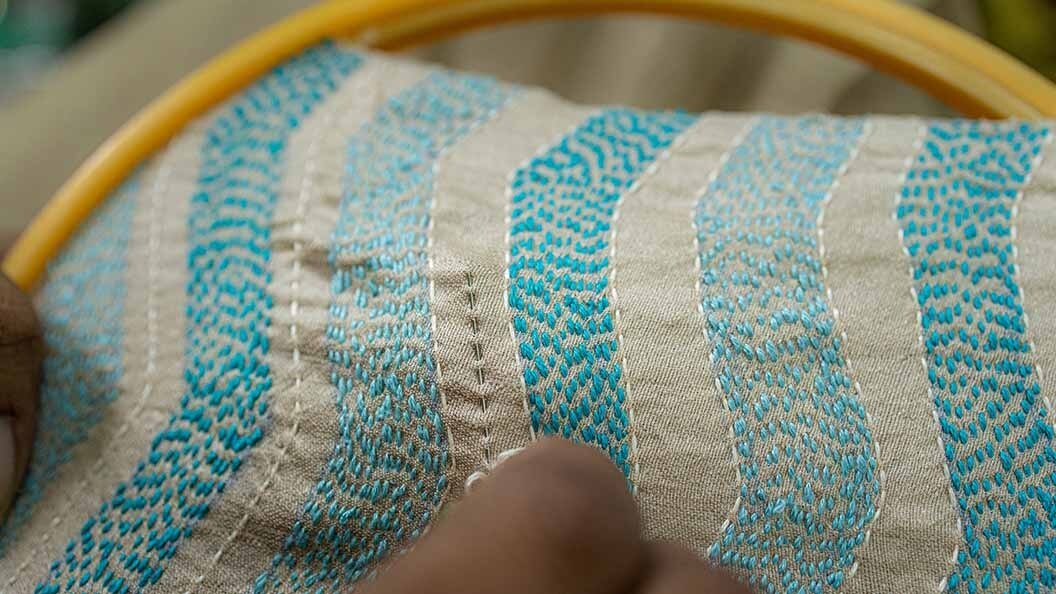
This is a caption explaining what is happening in the image. Clearly depicting the process of this beautiful craft.
Memory Vault
A Sujani-embroidered quilt communicates diverse messages from the community. Some of these stories might be controversial to the modern collector but are important in the historical context. These can range from stories of intoxicated men with their spouses to those of women observing purdah and the practice of dowry.
Discover
The Collection
Featured
More from India