The Craft
Hand Embroidery
Rajasthan
Crafts and cultural exchange in the Thar Desert
The Thar Desert in Rajasthan, located on migratory routes from Central Asia, Africa, Afghanistan and Pakistan to India, is a site of cultural fusion. The multi-cultural influences reflect in its art and craft, such as the appliqué work by the Meghwal community also known as thari, and sheesha (mirrorwork) embroidery from Jaisalmer.
The Making
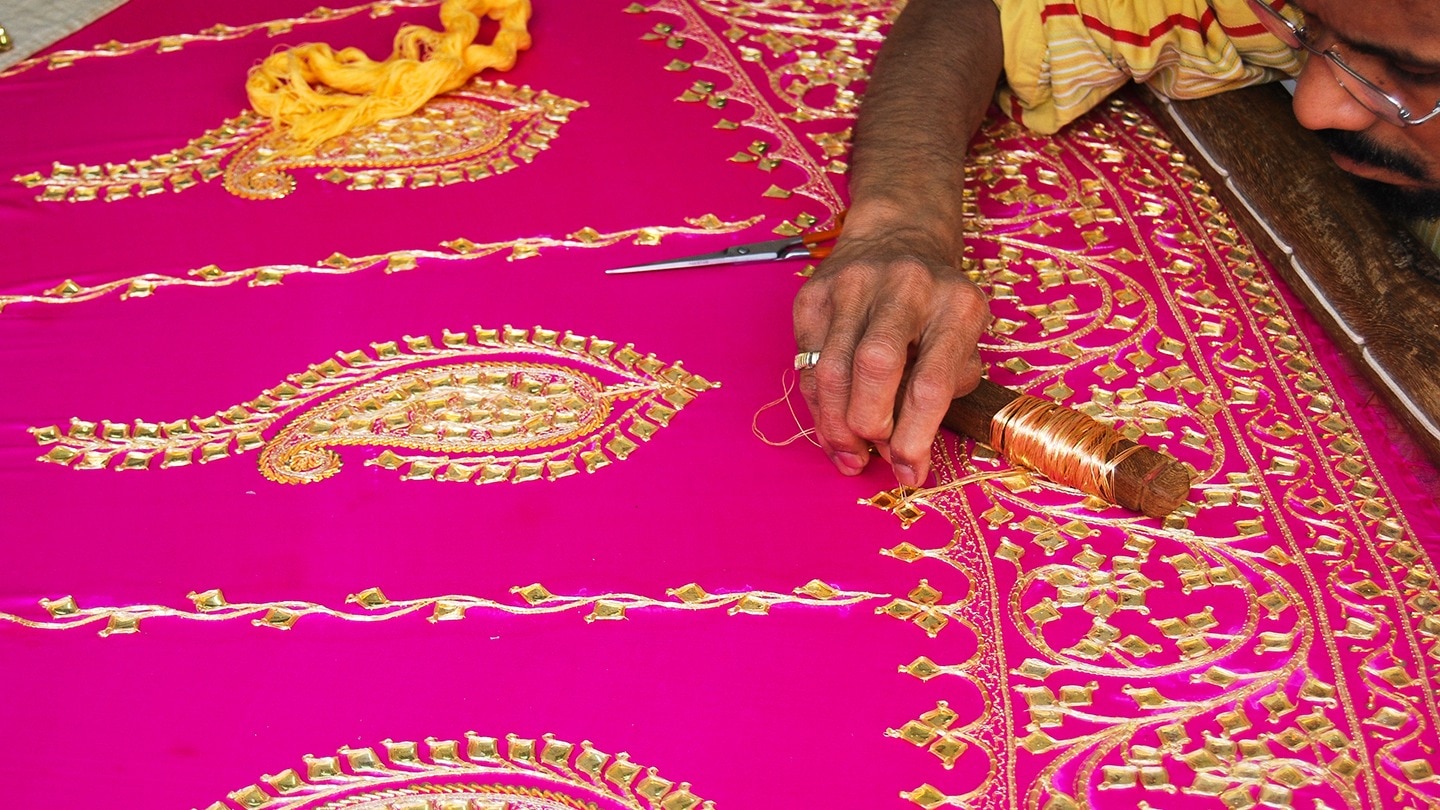
Embroidery is a key component of Meghwal folk culture, seen in bridal attire, festive clothing and gifts. This style of embroidery can either be pako (permanent) or kacho (temporary). Geometrical patterns, with intricate chain stitch variations and herringbone stitch create pako stitches. The kacho embroidery is famous for its use of counted thread work techniques such as suf, kharek, kambhiri and mucca. The last uses gold and silver thread.
The Legacy
The origin of mirrorwork is often traced in crafts studies to Persia in the 13th century, after which the craft made its way to India during the Mughal period. Islamic faith is known to encourage the use of mirrors in arts and craft, because mirrors are believed to trap evil, and deflect bad luck. Similar beliefs are shared in Hindu and Jain ideologies, where sheesha torans (door hangings) were hung to ward off evil spirits.
Memory Vault
The British Museum in London houses an outstanding example of Thari embroidery. This is an abochhini (wedding shawl) from the Thar Desert or beyond, in southern Pakistan. It's made of cotton and decorated with silk thread embroidery in chain stitch and sheesha work.
Discover
The Collection
Featured
More from India
INDIA'S CRAFTS
Discover More
Jodhpur Bone Inlay
Phad Painting
Jodhpur Leather Craft
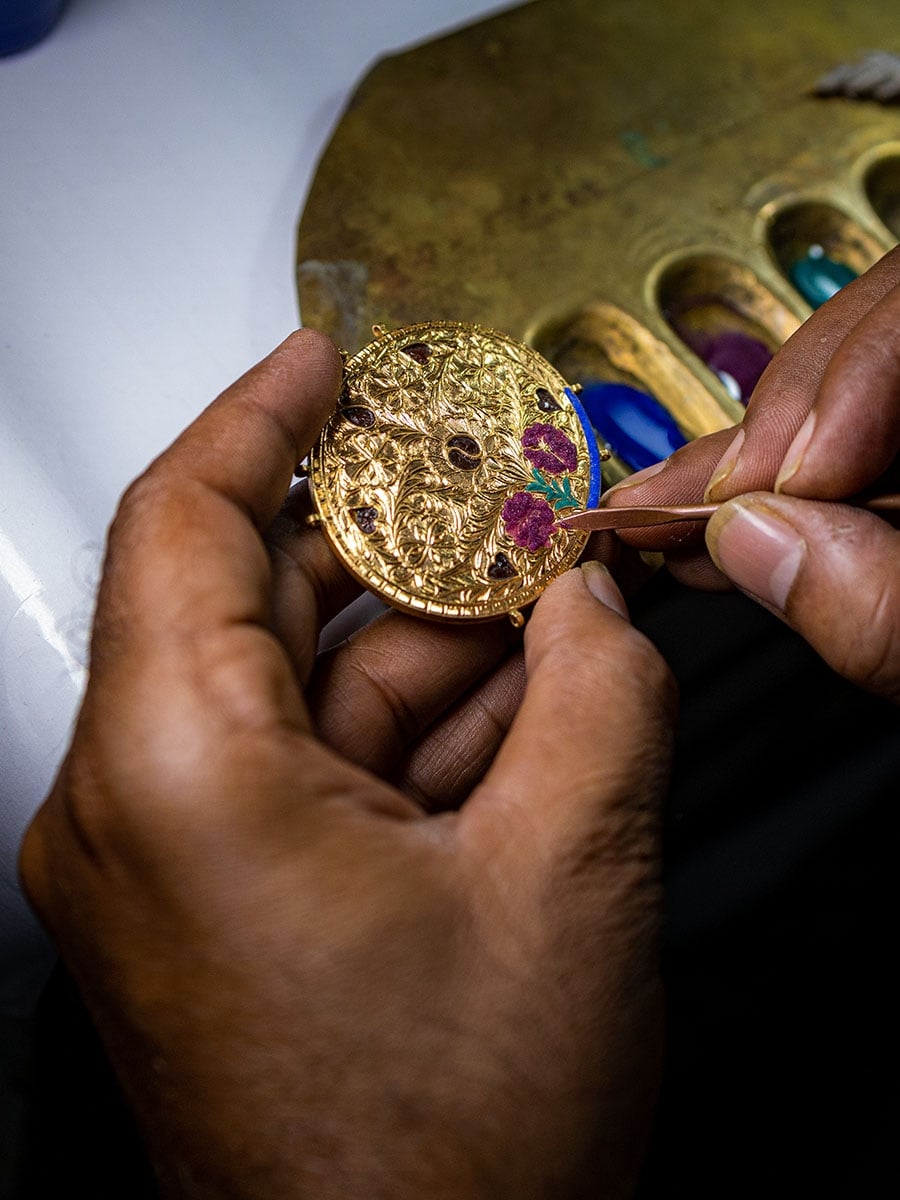
Jaipur Meenakari