The Craft
Chain Stitch Embroidery
Jammu & Kashmir
From the Valley of intricate designs and vibrant hues
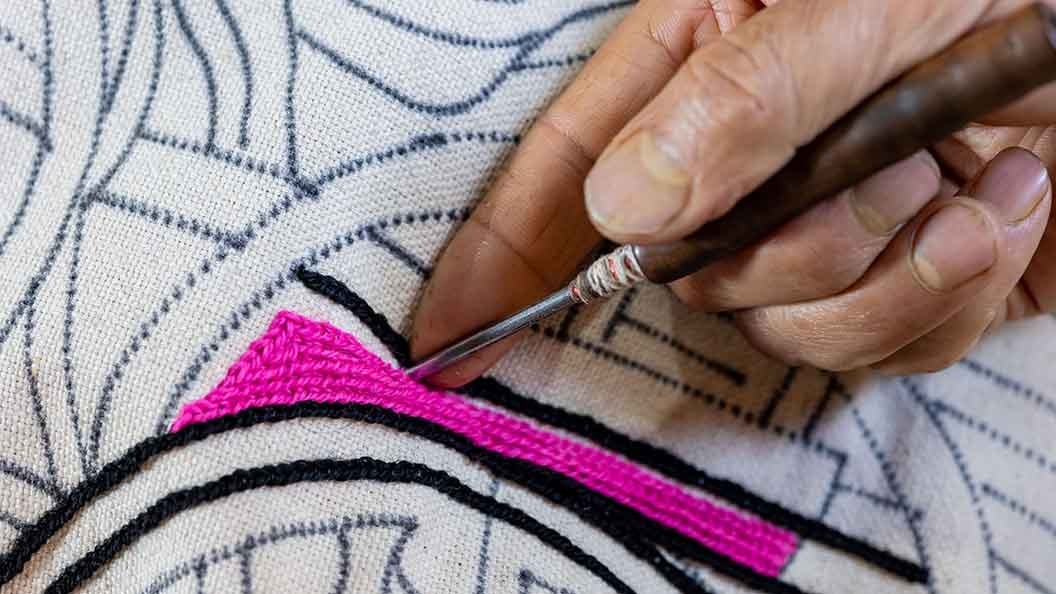
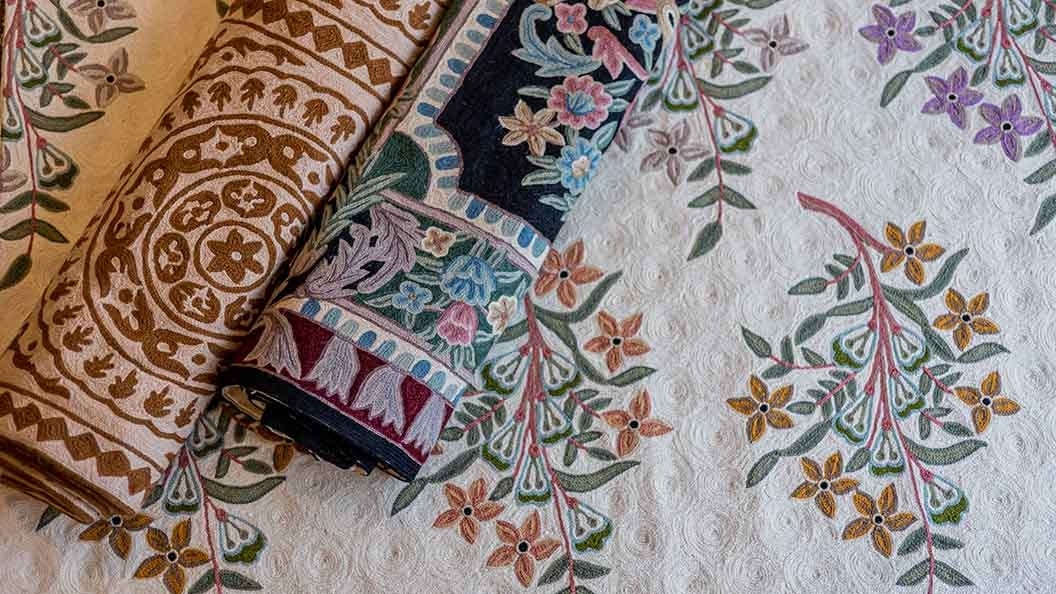
Jalakdozi, or the chain-stitch crewel embroidery, is a labour intensive craft, but a labour of love from the Kashmir Valley. The karigars or craftsmen spend hours working on the intricate motifs that embellish shawls, rugs, etc.
The Making
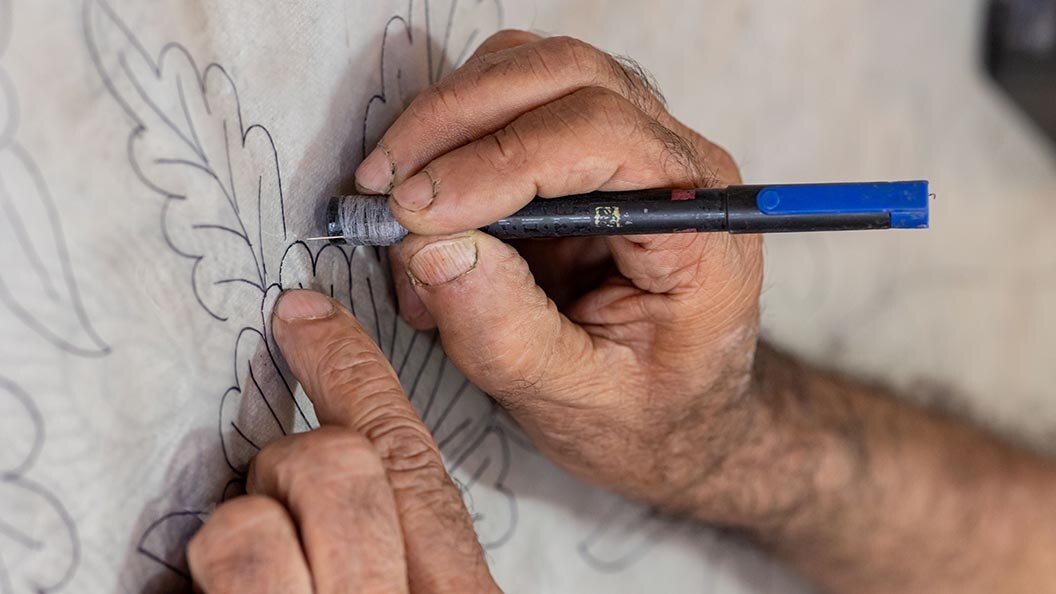
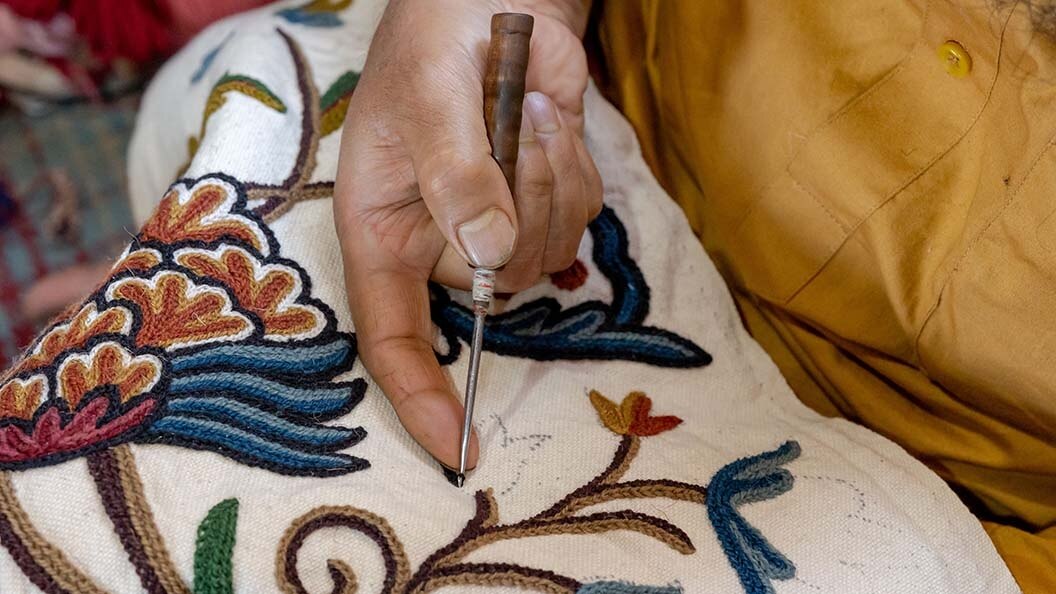
The karigars use threads of wool, cotton or silk and sew with the aari, a traditional needle with a hook and a wooden handle. Artisans create the Jalakdozi by guiding the woollen thread across the designs and manoeuvring the aari with precise alignment. Before that, the naqaash (pattern maker) meticulously traces a design which is then transferred onto tightly woven dusoot (cotton fabric), which acts like the canvas. This base fabric can also be of rayon, silk or pashmina.
The Legacy
There are several theories about the origin of Jalakdozi embroidery. Most consider it to have evolved from the pre-loom crocheting times. Mughal patronage of the craft and its emergence in the 16th century is also well documented. This style became popular because it can be used for many different household and personal items like rugs, dhurries, tapestries, wall hangings, shawls, and clothes. The motifs are of flowers and plants, influenced by Persian traditions. One such recurring icon is the hyan (mango).
Memory Vault
There is a story that says that Jalakdozi began almost 700 years ago during the time of Shah Hamadan. The revered saint is well-recorded as a patron to the Kani shawl industry and other crafts in the latter half of 14th century. Some researchers suggest traders from Damascus, a city at the centre of the Silk Road, brought their own version of crewel embroidery to India in the 13th century. The book Collecting Aari: The Amazing Crewel Embroidery of Kashmir, by Rita Laws, goes into detail about this beautiful craft.
Discover
The Collection
Featured
More from India
INDIA'S CRAFTS
Discover More
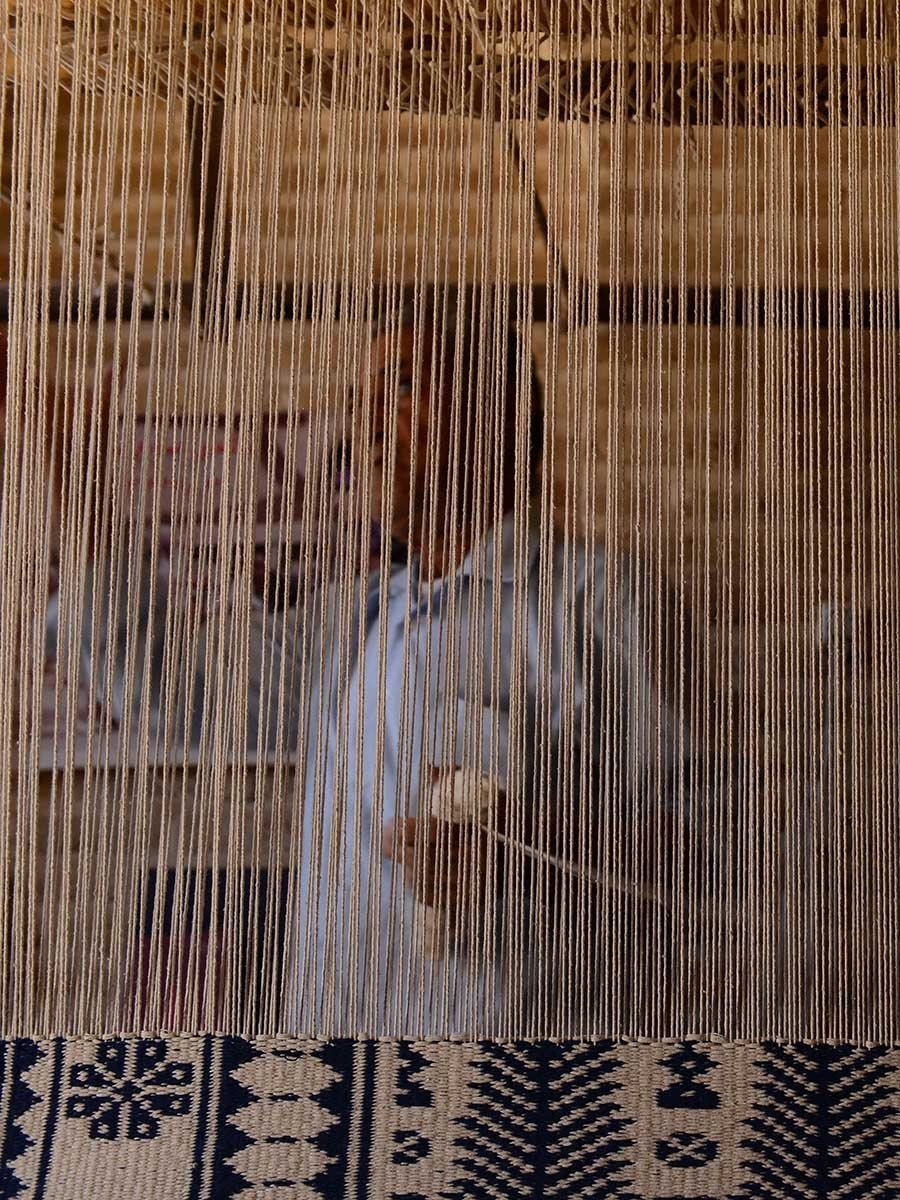
Kashmir Hand Knotted Carpet
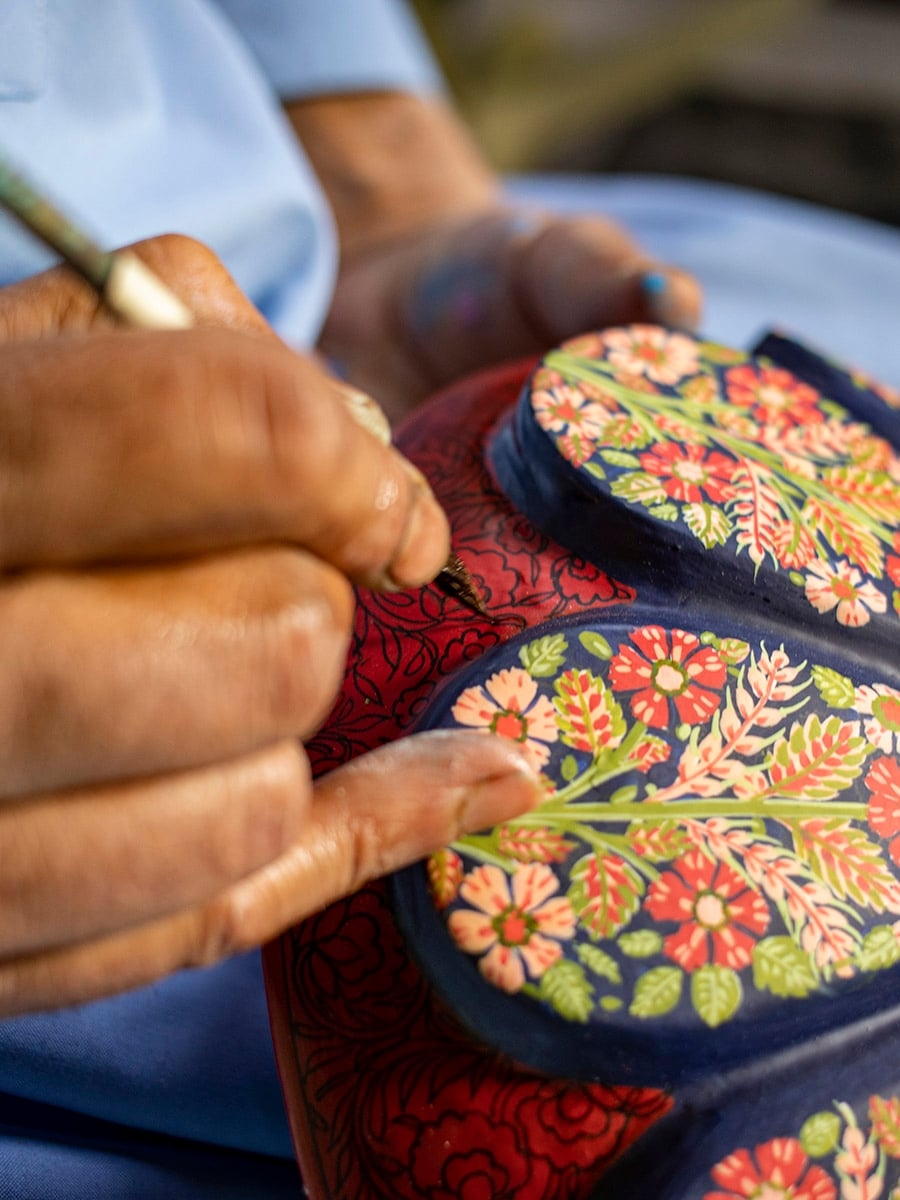
Papier-mache-Srinagar
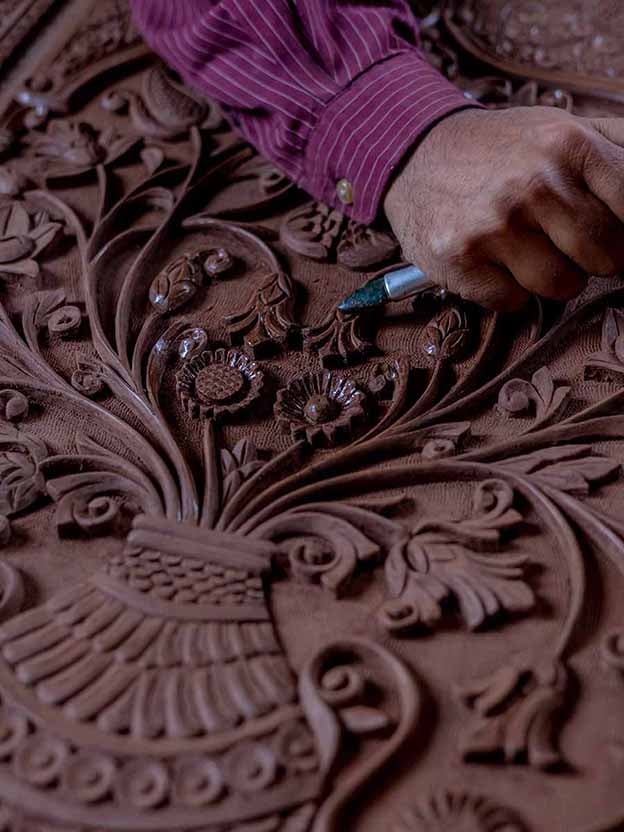
Walnut Wood Carving
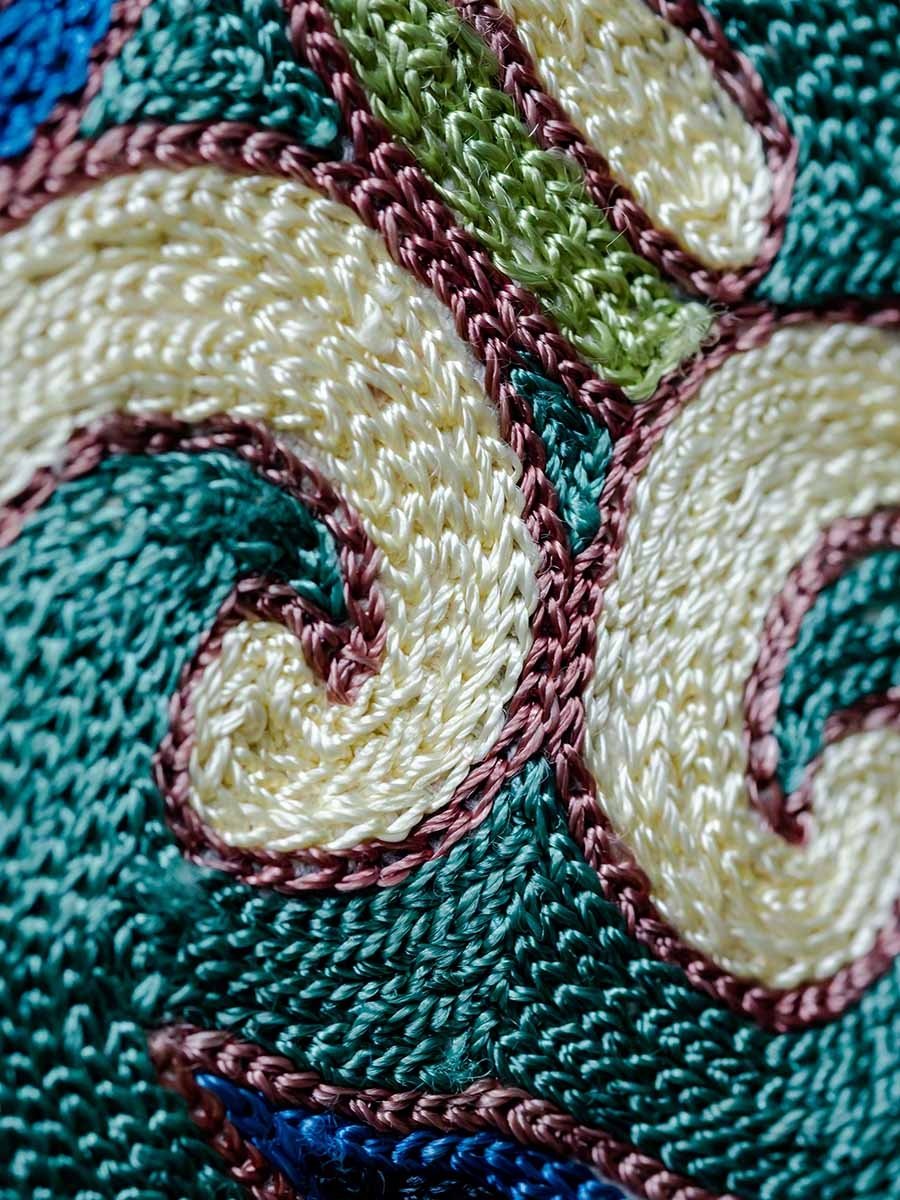
Kashmir Chain Stitch Hand Embroidery