The Craft
Kalamkari Hand-Block Print
Andhra Pradesh
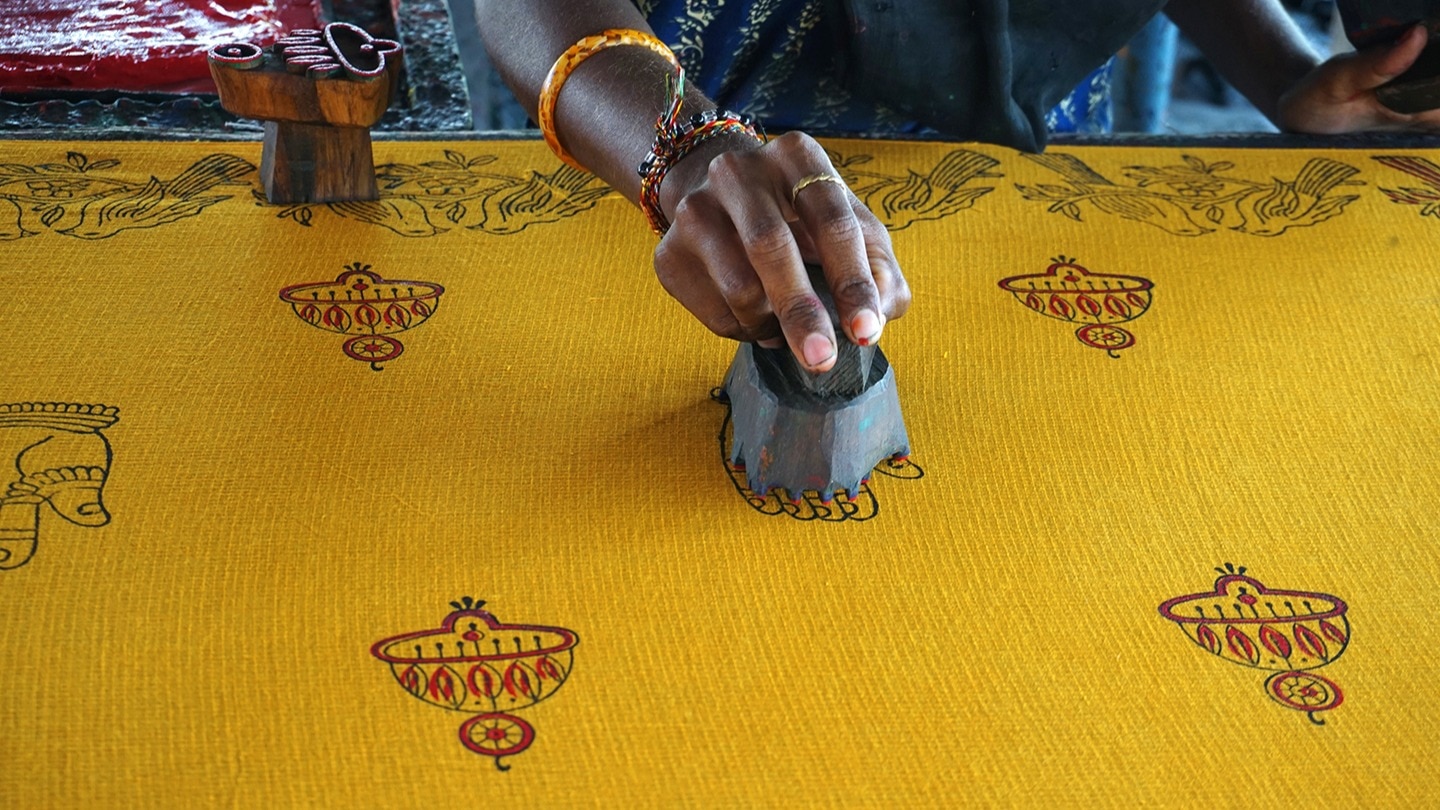
Nature-inspired artistry of the Kalamkari block print
Kalamkari hand-block printing, specifically the Pedana style, has its roots in the 18th century art of hand-painting on textile. Originally, it involved the use of a pen (kalam), which is how it got its name. As its demand rose among the Mughal and Deccan royalty, the craft transitioned to wood-block printing.
The Making
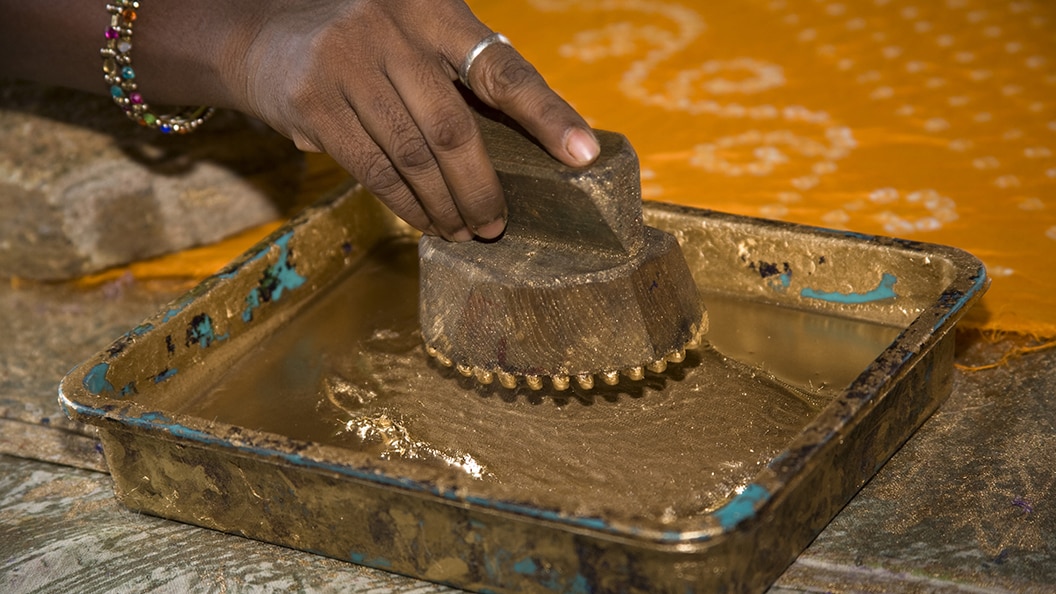
Kalamkari art takes time and effort to create. Practised extensively in the small town of Pedana, roughly 12 kilometres off the old coastal trading city of Machilipatnam in Andhra Pradesh, the block printers belong to the Devanga, Kannebhaktulu, Senapathalu and Padmasali communities. They are dedicated to preserving the unique print. The common designs include enchanting trees, flowering vines like poppies and intricate Persian-inspired motifs too. There are 17 stages in the creative process. At each stage, the craft embraces nature, from preparing the cotton textile to block printing and dyeing. These dyes come from roots, leaves, indigo, tamarind seeds and turmeric.
The Legacy
Today, Kalamkari block prints are used in a wide range of products, including clothing and lifestyle essentials. It has gained worldwide recognition, and has also been used in some forms of chintz. Designers have reinterpreted the prints for runways. The art form was certified with the Geographical Indication (GI) tag in 2013.
Memory Vault
The crafts and textiles unit at Kalakshetra in Chennai proudly retains the practice of Kalamkari block printing. The Victoria and Albert Museum in London displays a Kalamkari wall hanger from the 15th century.
Discover
The Collection
Featured
More from India
INDIA'S CRAFTS
Discover More
Mangalgiri Handloom
Wood Carving-Andhra Pradesh
Silver Filigree
Venkatagiri Handloom