The Craft
Chikankari Embroidery
Lucknow
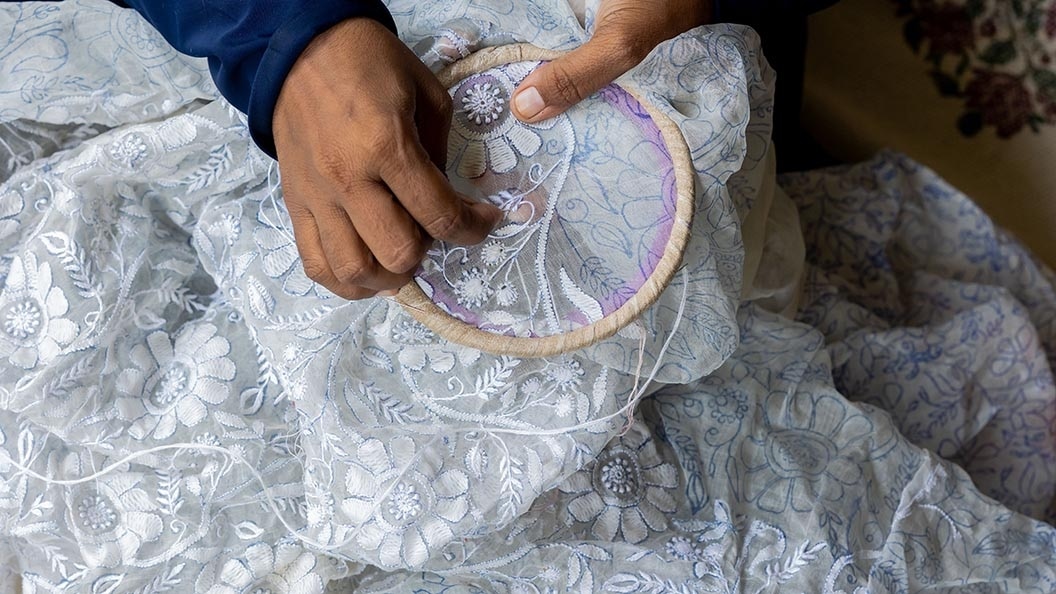
Every Stitch A Marvel
Nur Jahan, the Mughal queen ensured that Chikankari embroidery, originally done with white thread on white cotton cloth flourished. It continued to be popular with royalty even in the 19th century, when Nasir-ud-Din Haider, the second king of Oudh extended his support to the craft.
The Making
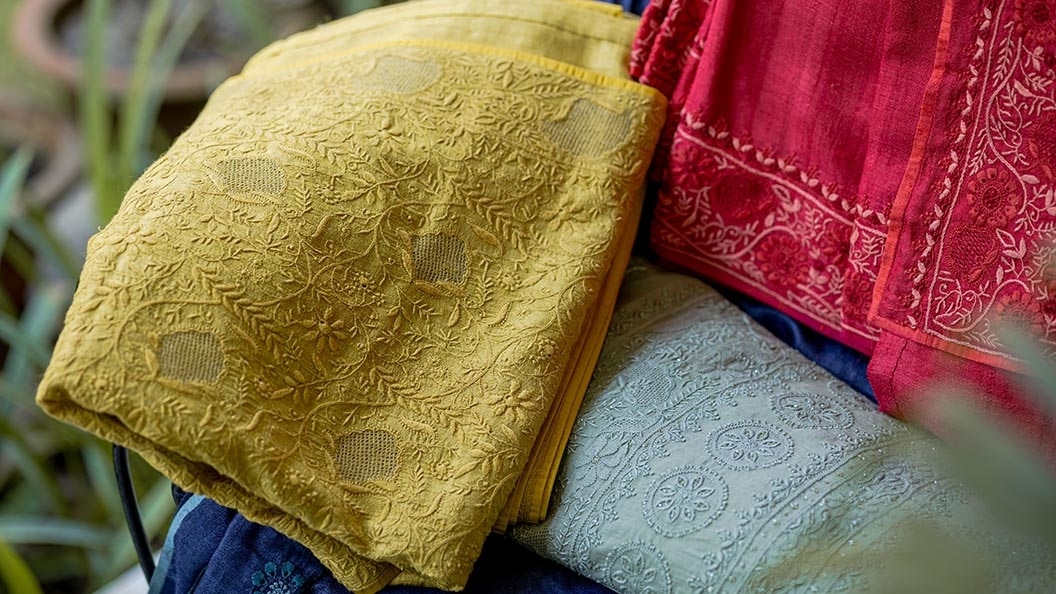
Chikankari uses more than 30 stitches that create a lace-like, monochromatic effect. The embroiderers use three kinds of stitches to get the desired effect. They are the flat stitches, the embossed stitches, and the jaali (lattice) work. Bold or delicate detailing covers the material being embroidered. Artists undergo training to learn florals, geometrical, and stylised patterns. They can train for several years and often specialise in specific stitches.
At one time, Chikankari was the domain of male karigars (craftsmen). In the late 19th century it lost some of its popularity. But, over time, women began to take up the needle and that is when the story of Chikankari caught the attention of fashion designers, who used the art form to great effect.
The Legacy
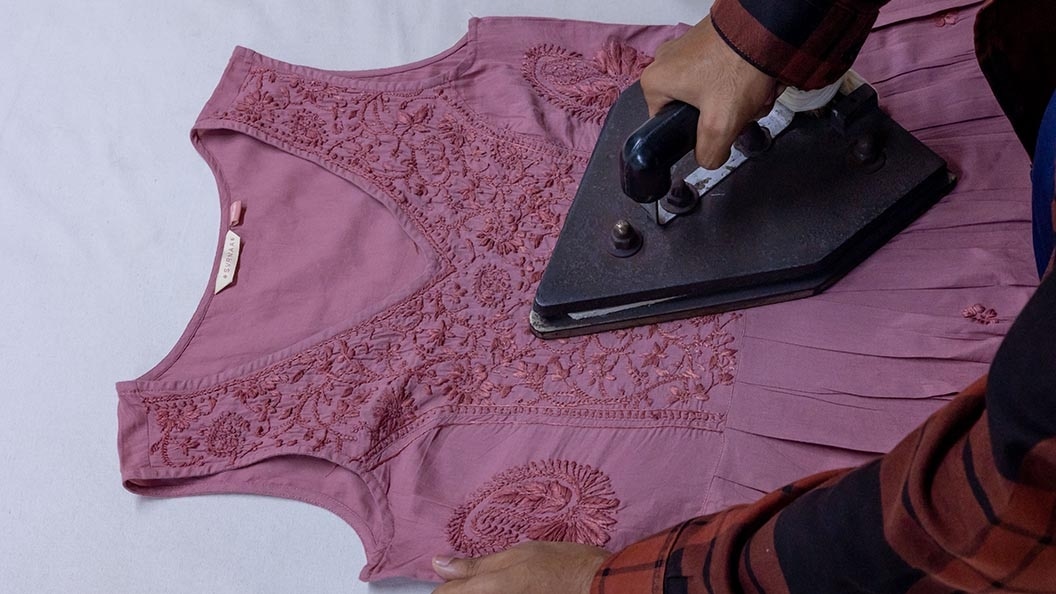
Design intervention helped reinvent chikankari and revitalised the use of mukaish (metallic surface embellishment). They also introduced the use of colour, on dyed fabrics as well as white embroidery on materials like silk tussar, georgette and chiffon.
Memory Vault
In 1986, designer-filmmaker Muzaffar Ali made Anjuman, a film about exploited Chikankari embroiderers fighting for their rights. The film starred Shabana Azmi and Farooque Shaikh, who was so taken in with the craft that he decided to wear only Chikankari garments henceforth.
Chikankari was certified with the Geographical Indication (GI) status in 2008.
Discover
The Collection
Featured
More from India
INDIA'S CRAFTS
Discover More
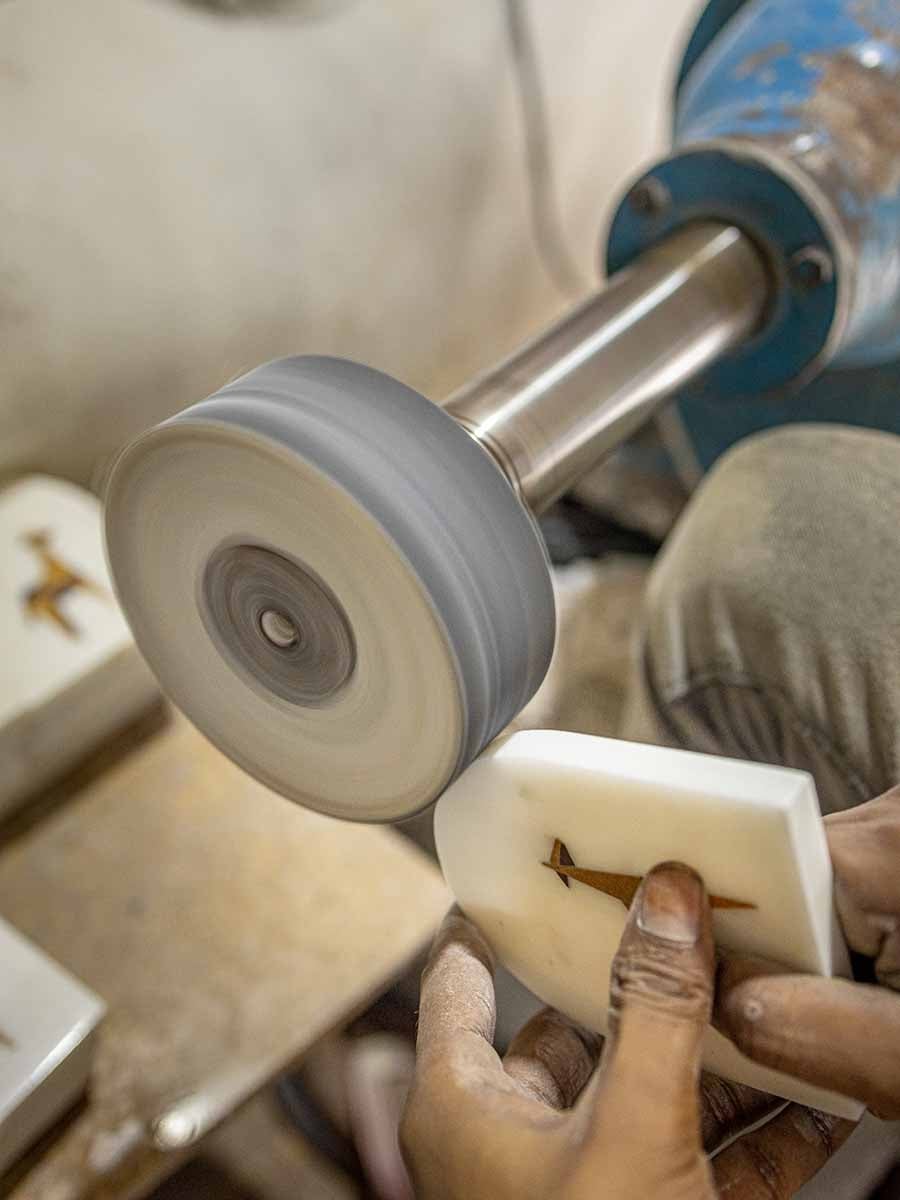
Marble Carving-Uttar Pradesh
Banarasi Handloom
Bhadohi Hand Knotted Carpet
Wood Carving-Saharanpur