The Craft
Tarkashi
Rajasthan
Tradition and lore on metal and wood
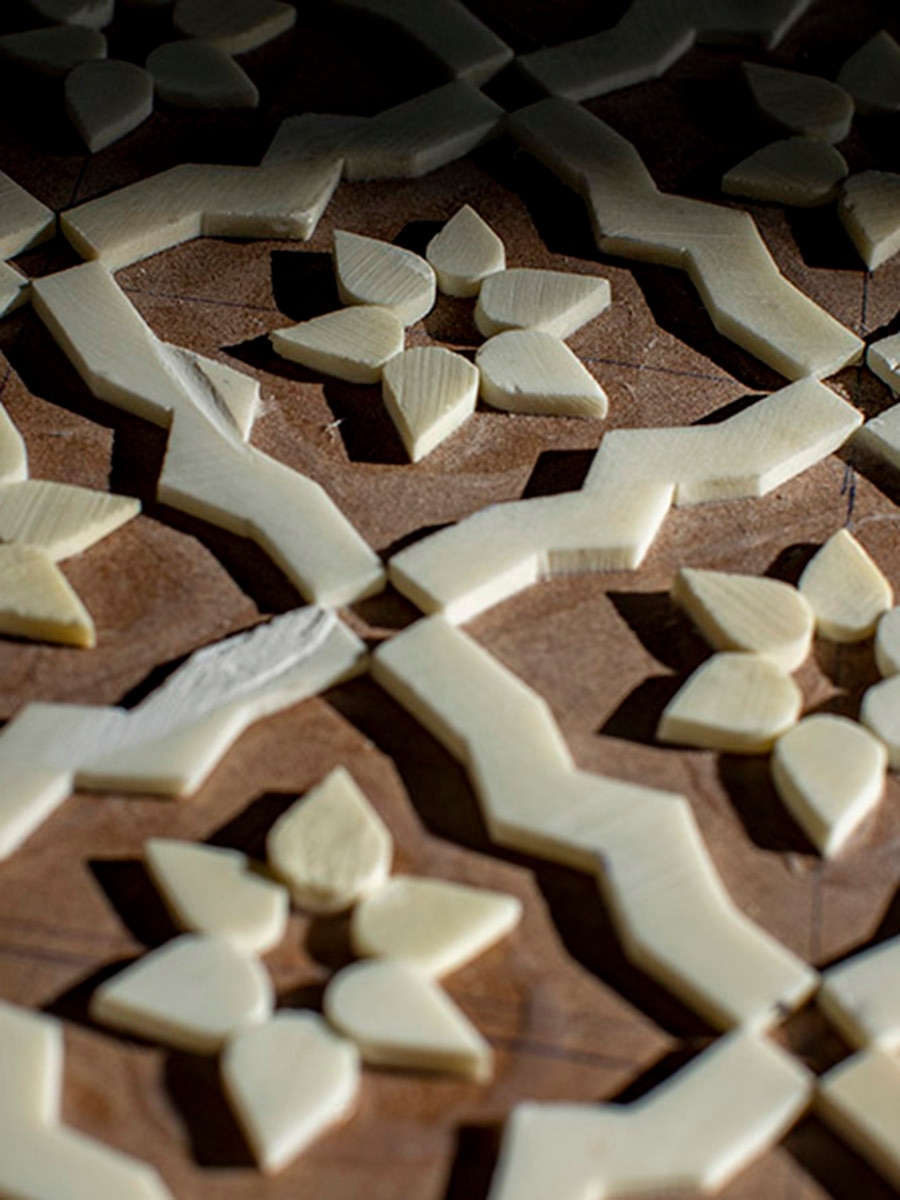
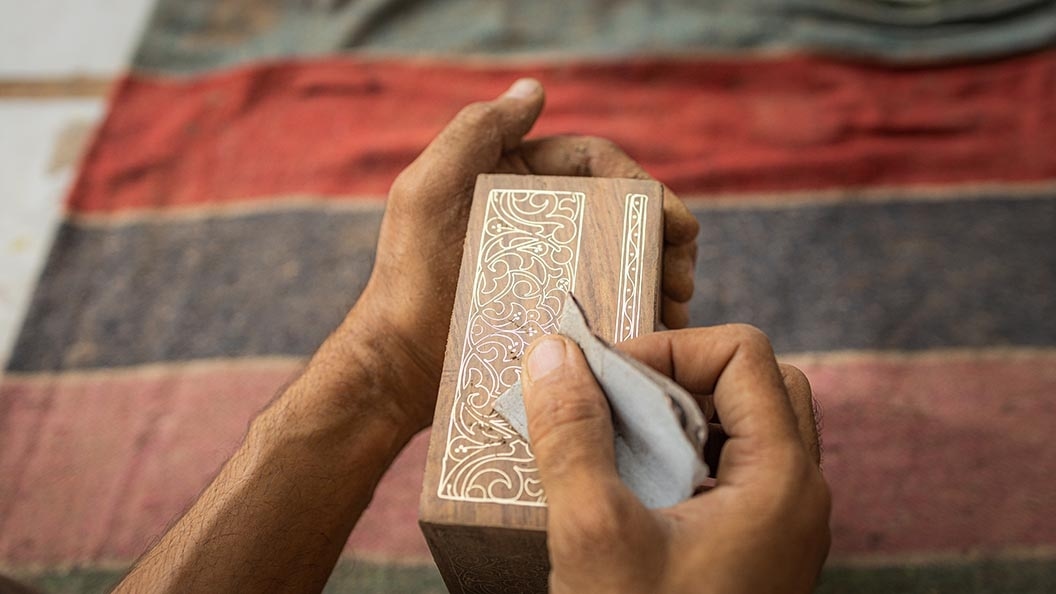
Tarkashi technique is a metal inlay craft, more than 500 years old and with Mughal influences. It involves embedding delicate flattened strips of brass, copper, or silver into wooden surfaces. Tarkashi work can be seen on doors, windows, mirror frames, boxes, inlaid containers, pens, penholders, lanterns and ornamented shrines.

The Making
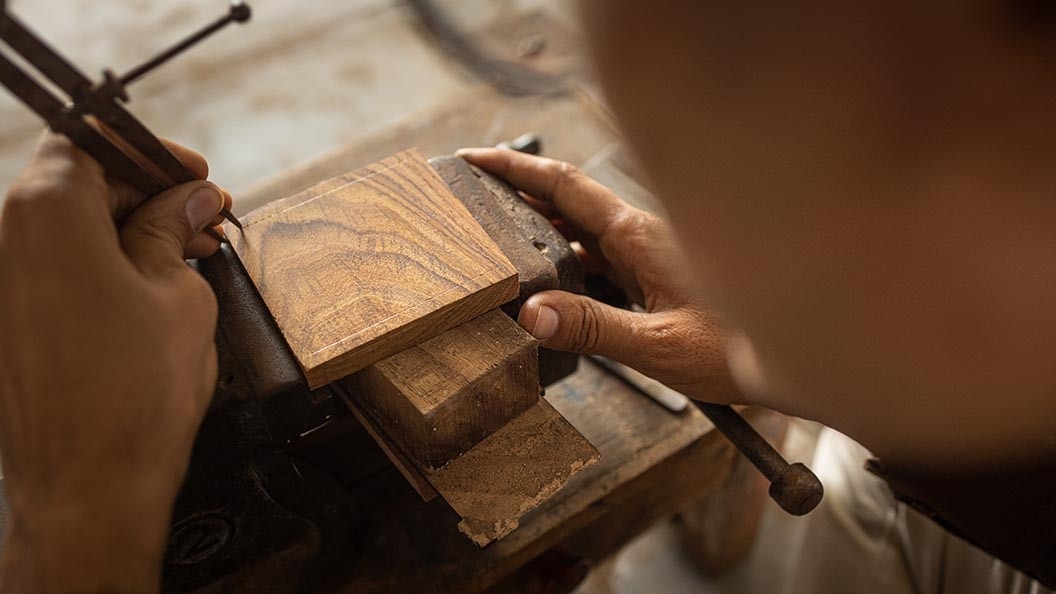
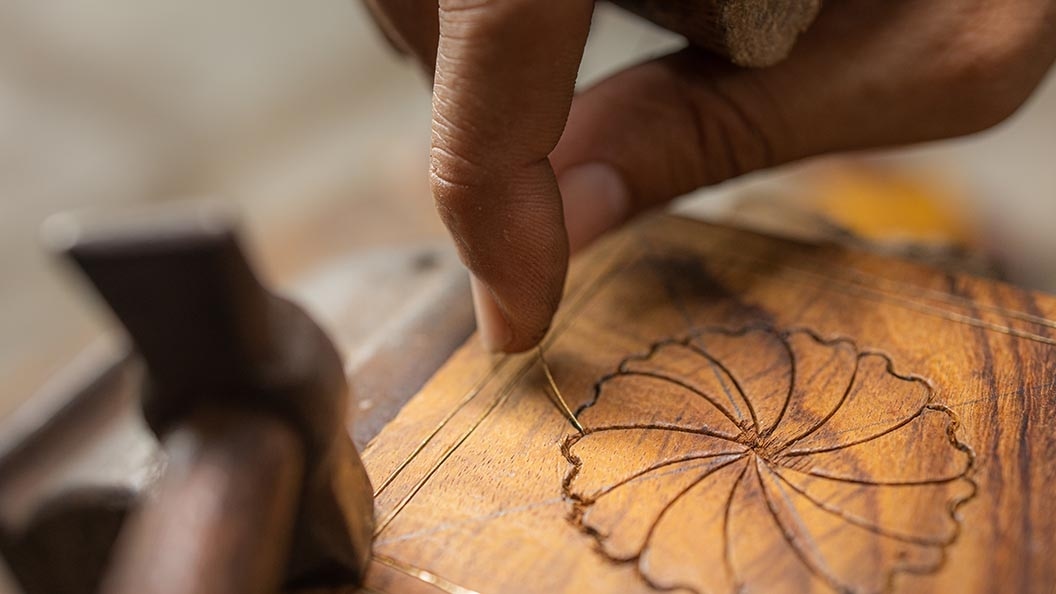
Artisans use dark-hued and seasoned sheesham wood with high oil content. This helps secure the bond between the inlaid metal and the wood. First, they sketch intricate designs onto the wood. They carve delicate patterns, creating grooves that are no more than 1mm deep. Then, thin strips of metal are heated and hammered into these grooves, creating small, coiled dot-like formations. These are called bhiriyan, which are directly embedded into the wood.
The Legacy
During Sawai Jai Singh's reign in Amber, Sri Sarwan Lal Misra, a skilled artisan from Mainpuri (in Uttar Pradesh), was invited to Jaipur to practise and teach this craft. Now, some four families and fifteen individuals within the Jangid community keep alive the tradition.

https://cdn.pixelbin.io/v2/patient-paper-41f385/original/Craft_Images/Taarkashi/Taarkashi_-__2.jpg
Memory Vault
Visitors in Rajasthan can explore Tarkashi work in historical places and forts of Rajasthan. Such monuments showcase intricate floral and geometric patterns with ivory work.
Discover
The Collection
Featured
More from India
INDIA'S CRAFTS
Discover More